I have been on a long break from this blog for the last couple of years (my last post before Juneteenth was March 21, 2021!!!). Besides homeschooling my children and counseling folks, I’ve been working on my very first book about my ancestor named George Wheaton. Long story short, Wheaton was a freedman in postbellum Louisiana; he drew ire from his community after buying hundreds of acres of property and pushing for civil rights for former slaves. Eventually, he was forced to leave everyone he loved and everything he had established in his home in Claiborne Parish.
This project has been an intense one, centered on the end goal of making George Wheaton’s story available to my family and others. Sometimes it has been energizing, and, other times, it has been enervating. It has brought me to tears of joy and excitement and also to tears of frustration and disappointment, beyond what I could have imagined. Writing this book has been like dealing with a dating partner you really love and want to be with for life but who forces you to deal with stuff you’d rather just keep hidden and undeveloped for a while. In spite of the labor involved, it has been totally worth it. Not only have I learned things I didn’t know about that particular lineage, but I’ve connected with many relatives I didn’t know previously. I’ve also come to understand better the value of publishing my genealogy research.
In academia, the mantra “publish or perish” reigns supreme, but in the case of family history research, one of our guiding principles should be “publish before perish”. I was reading an article about biblical archaeology that featured a quote by Dr. Jodi Magnes – “The goal of archaeology is not excavation; it’s publication;” even more specifically, as another archaeologist, Dr. Aren Mair wrote, “Publishing [one’s] excavations in [one’s] lifetime is perhaps the most important part of an archaeologist’s professional role.” After working on the Wheaton Book Project and reading Dr. Mair’s article, I can see how and why this principle applies to genealogy, too.
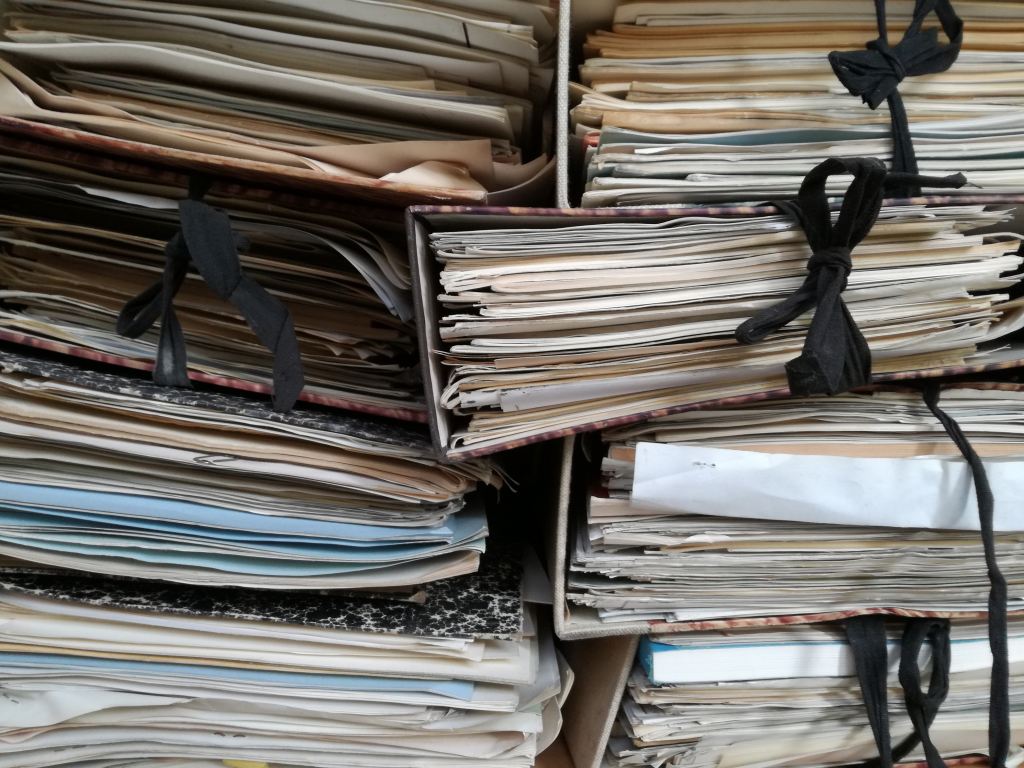
I’ll speak for myself… I enjoy visiting cemeteries and courthouses, taking genealogy classes, and searching the myriad sites offering access to old records. But what good does it do me or anyone if I don’t synthesize the information and make it available for use by others? Publishing in my lifetime ensures that family history jewels get passed on to future generations, enabling others to learn valuable lessons about life and how to navigate it successfully. It also saves colleagues and future researchers unnecessary time, effort, money, and other resources it takes to ask questions I’ve already posed or to search for puzzle pieces I’ve already discovered and assembled. In fact, maybe having the information will lead others to fill in gaps, ask different and new questions, or to apply different perspectives and strategies in answering the original questions.
While some genealogy research questions take time and access to answer adequately or completely (for example, DNA has only been available to genealogists the last 20 years!), it is possible to publish something meaningful in the meantime. According to the Board for Certification of Genealogists Professional standards, “Genealogists assemble research results into family histories, lineages, narrative genealogies, and pedigrees. They also present research outcomes in articles, blogs, case studies, charts and forms, kinship-determination projects, narrative histories, and other written products and projects.”1 When service-oriented genealogists follow this standard, they are making provisions for the preservation and continuity of the research they’ve conducted.
Research Tip: Try committing to not taking on a new project until you finish summarizing your work on a favorite family line or research question; or, consider scaling back a big project so that you can make some headway on a smaller one.
I’m working on becoming a better genealogist. Writing this blog and publishing my book are first-step efforts to achieve that goal. I don’t know how much time I have left before I die, so I will try to do as much as I can until then.
Footnotes
- Board for Certification of Genealogists, Genealogy Standards, 2nd. ed. (Nashville: Ancestry, 2019), 36. ↩︎
 The Genealogy Griot