PART FIVE: THEIR NECKS WILL BREAK
Tried and Convicted
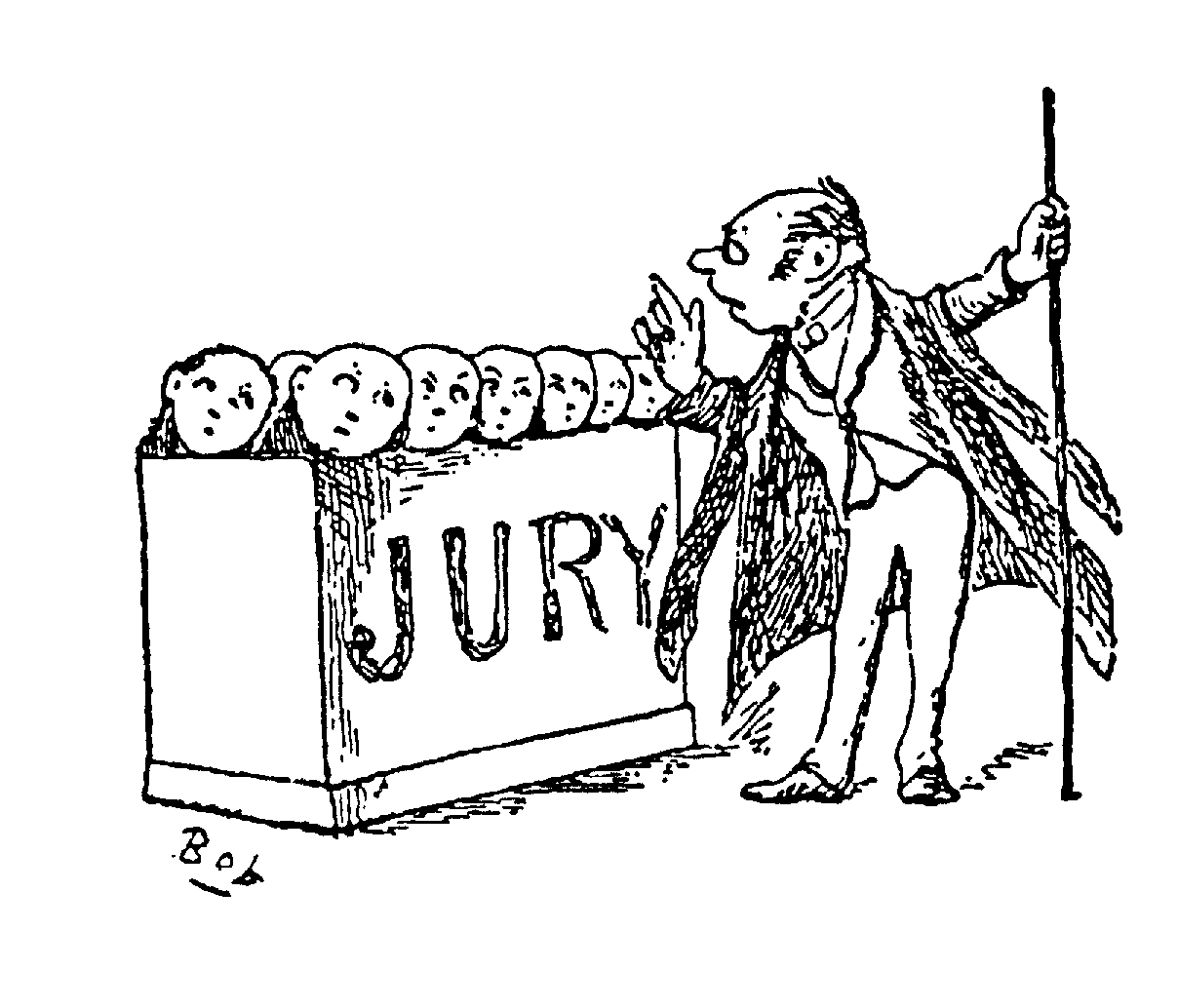
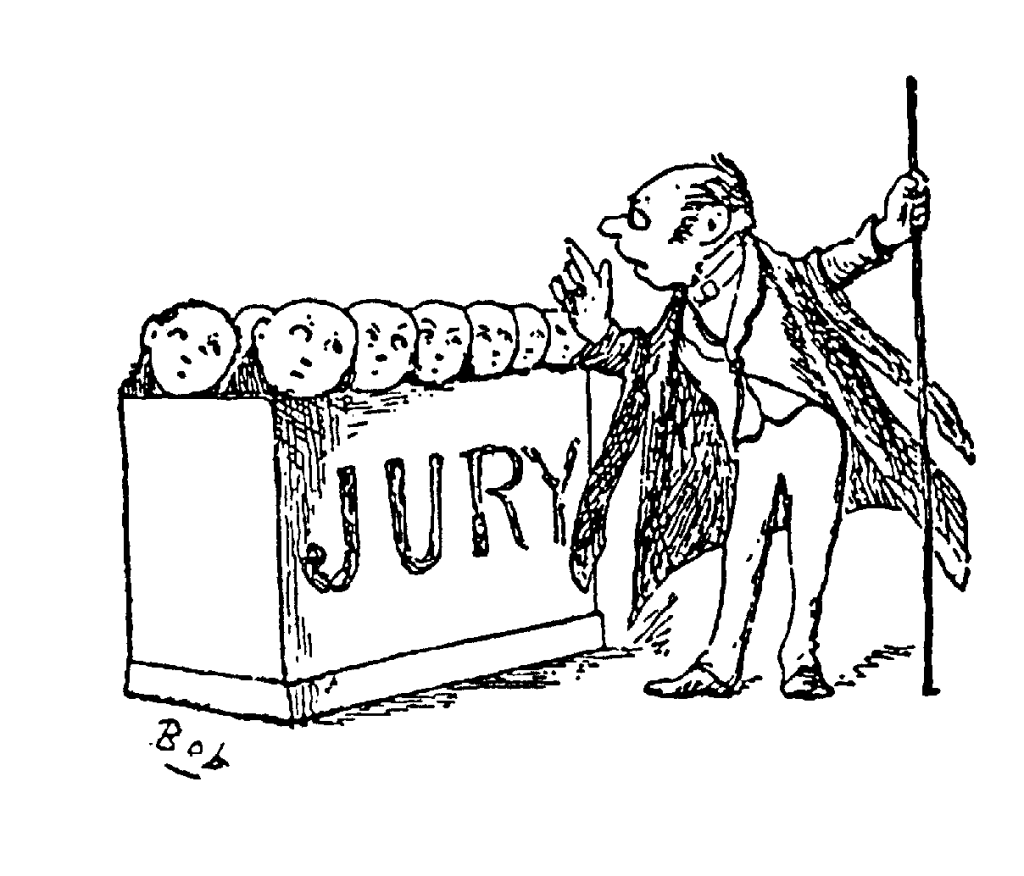
The case against William and Jean Baptiste Chevis for the murder of Dr. Duchesne T. Courtney was scheduled to begin Monday, September 30, 1895. The St. Landry Clarion acknowledged that it was hard to find impartial jurors “owing to the wide prejudice existing against the accused.” In fact, one potential juror, “when asked if he had formed an opinion, replied, ‘Yes; hang the ——!” The newspaper further reported that
“immense crowds from every section of the country flocked [there] to attend the trial, and when on Monday, the day set for trial, the case was not called up owing to the failure of the clerk of court to have the jury summoned, things looked squally. The friends of the murdered man, with the memory of their dead comrade fresh in their minds and hearts which pined for vengeance, wrongly thinking that the trial had been purposely delayed, met at the opera house to take action on the matter. A lynching was freely discussed on the streets, but the men assembled were law-abiding citizens, and as soon as the cause of the delay was explained, they readily consented to allow the law to take its course. Thursday they returned, and left only when the jury returned a verdict of guilty.”1
The Opelousas Courier reported that, on October 03, 1895, the State’s case against Jean Baptiste and William Chevis was presented for consideration, “and it required all the time of the Court that day and until Friday [October 04] at 11:30 to empanel the jury and hear the evidence. The case was then argued…”2 According to the Times Democrat, “Charles F. Garland represented the accused, while Hon. E.B. Dubuisson, district attorney, acted for the state.”3 A critical element of their argument was explaining the motive for the Chevis brothers’ crime. The Clarion opined,
“The defense dismally failed to show any cause or provocation for the killing other than the fiendish and blood-thirsty hatred for the white man which beat in the heart of some negroes, the depraved state of the race which is only held in check by the fear of the superior race, but which often breaks out and cause the perpetration of the blackest crimes imaginable.”4
The jury apparently agreed with at least part of The Clarion’s assessment. By 5:30 p.m., “twelve honest and intelligent men [had] filed into the courtroom” to deliver a guilty verdict against Jean Baptiste and William Chevis. The murder conviction was primarily a result of William’s confession and “the unimpeachable testimony of Mr. Alexandre Guilbeau” against Jean Baptiste.5 The brothers would be hanged for the crime of murder unless their attorney, Mr. Garland, was successful in winning a motion for a new trial, which was “filed, submitted, and taken under advisement” less than two weeks later.6
Hope Deferred
In a November edition of the Opelousas Courier, an anonymous correspondent calling himself Justice made a “plea for the Chevis brothers [in which] the main facts of the case [were] presented in a clear and forcible manner” that was expected to result in “a modification of the fell decree”.7 In it, he conveyed his sense that, with their executions, “…a crime [was] about to be committed in [their] midst which chill[ed] with horror the human heart, and which [would] tarnish and stain the fair name of the parish of St. Landry, which ages and generations to come [could] never efface, and which [would] bring the blush of shame to the cheeks of thousands of sons and daughters of old St. Landry yet unborn.“8 With the outcome of the Chevis brothers’ case still in limbo in December 1895, The Clarion shared its perception of the community’s generally lackadaisical reaction,
“Valuable white citizens have been foully murdered in this parish, Dr. Courtney was recently assassinated by negroes at Coulee Croche, and no indignation meeting was held. But here because a negro politician [i.e., John Baptiste Zacharie] who controlled some votes is killed an indignation meeting is turned loose on the community…[which] is a good way to work the niggers up to such a pitch at their own importance that several first-class funerals will have to be held in order to persuade them that this is a white man’s country.”9
On March 23, 1896, Jean Baptiste’s and William’s appeal reached the Louisiana Supreme Court, which denied a rehearing of their case. The Town Talk relayed a report from misnomered “The Opelousas Clarion” that the “cold-blooded murderers [would] now pay the penalty of their crime on the scaffold of justice, which they so richly merit…The sooner Gov. [Murphy James] Foster signs the death warrant of these two convicted villians [sic] the better it will be.”10 Indeed, within days, the Governor signed their death warrants and set the date for their executions as Friday, June 12, 1896.11 However, Mr. Garland, Jean Baptiste’s and William’s lawyer went to work again on their behalf, on May 30th publishing a notice in The Opelousas Courier that he had applied for a commutation of their death sentences to life imprisonment in the penitentiary.12
Doomed
Preparations for the Chevis brothers’ penalty for Dr. Courtney’s murder started anyway, just in case Governor Foster remained committed to carrying out the Chevis’ executions. On June 8th, after being notified that the commutation was not approved, Sheriff Fontenot went to the jail to read the death warrant to the Chevis brothers. Jean Baptiste and William stood up when the Sheriff began speaking. Their faces were grim and stoic. William was frozen silent, but Jean Baptiste made his request: that the clothing traditionally marking the solemn occasion of a hanging – black suits, white shirts with white cravats (or neck ties), and black socks – would be new and would include black slippers. Their father, John Chevis, was there and had questions of his own. In particular, he wondered if his family would be allowed to take charge of his sons’ bodies after the execution and what would happen if they were not able to do so. As was the custom at that time, John, other family members, and friends probably spent the night communing with the brothers, perhaps praying, singing, and reminiscing with them.13

On the night of Tuesday, June 9th, the gallows were set in place, dutifully anticipating the task at hand. According to The Clarion, “people from a long distance, mostly negroes, had come to witness the execution, and it created as much interest among the ignorant class as if it were a free show.” It was more likely that, just as Dr. Courtney’s sympathizers had flocked to show their support for the delivery of a guilty verdict at the courthouse months ago, the Chevis brothers’ sympathizers congregated there to offer encouragement and support in a most extreme hour of need. Alas, news of Governor Foster’s reprieve reached town by telegraph on Wednesday around noon; attorney Charles Garland had won the opportunity to present the Chevis’ commutation request to the State Board of Pardons.14 While some St. Landry Parish citizens no doubt looked forward to avenging Dr. Courtney’s death eye for an eye and tooth for a tooth, “there [was] a strong feeling among many of [its] best people in favor of these two men, and it would be a hard matter to convince a great many that this execution [would] not be a judicial atrocity as to one of the accused at least.”15 In time, however, the Chevis’ lost their bid for clemency. After over four months of procedure, deliberation, and “careful investigation, the Board refused to interfere,” the Chevis brothers were scheduled to be hanged on Friday, November 06, 1896.16
What’s next for the Chevis boys? Subscribe to the blog to find out in next week’s final post! In the meantime, if you want to learn more about how to use newspapers in your genealogy research, check out this post.
Footnotes
- “Will Hang: Willie and Jean Bte., Murderers of Dr. Courtney to Hang for Their Crime,” St. Landry Clarion (Opelousas, Louisiana), 12 October 1895, p. 3, col. 2; digital image (https://www.newspapers.com/image/174614912).“
- “District Court,” The Opelousas Courier, 05 October 1895, p. 1, col. 2; digital image, (https://www.newspapers.com/image/168362956/).
- “Negro Murderers Convicted,” Times-Democrat (New Orleans, Louisiana), 06 October 1895, p. 8, col. 5; digital image, https://www.newspapers.com/image/148748973).“
- “Will Hang: Willie and Jean Bte., Murderers of Dr. Courtney to Hang for Their Crime,” St. Landry Clarion (Opelousas, Louisiana), 12 October 1895, p. 3, col. 2; digital image (https://www.newspapers.com/image/174614912).“
- ibid.
- “Court Items, October 15,” St. Landry Clarion (Opelousas, Louisiana), 19 October 1895, p. 2, col. 5; digital image (https://www.newspapers.com/image/174615029).“
- A Correspondent Makes a Plea, The Opelousas Courier, 09 November 1895, p. 1, col. 4; digital image (https://www.newspapers.com/image/168364924).
- ibid, p. 4, col. 4.
- “That ‘Indignation’ Meeting,” St. Landry Clarion (Opelousas, Louisiana), 28 December 1895, p. 2, col. 3; digital image (https://www.newspapers.com/image/174617021).“
- “Their Necks Will Break,” Daily Town Talk (Alexandria, Louisiana), 28 March 1896, p. 1, col. 1; digital image, https://www.newspapers.com/image/215897738).“
- “The Chevises to Be Hung,” St. Landry Clarion (Opelousas, Louisiana), 30 May 1896, p. 5, col. 1; digital image “https://www.newspapers.com/image/174393275).
- Notice of Commutation, The Opelousas Courier, 30 May 1896, p. 1, col. 7; digital image (https://www.newspapers.com/image/168316855).
- Death Warrant Read, St. Landry Clarion (Opelousas, Louisiana), 13 June 1896, p. 1, col. 2; digital image (https://www.newspapers.com/image/168317540). Also, “Triple Hanging: Three Men Hurled into Eternity,” St. Landry Clarion (Opelousas, Louisiana), 09 March 1901, p. 2, cols. 2-4; digital image (https://www.newspapers.com/image/174382480).
- ibid.
- Governor Foster Fixed the Date of Execution, The Opelousas Courier, 24 October 1896, p. 1, col. 2; digital image (https://www.newspapers.com/image/168324076).
- “To Hang: The Chevis Brothers Will Expiate Their Crime on November 6,” St. Landry Clarion (Opelousas, Louisiana), 24 October 1896, p. 3, col. 3; digital image (https://www.newspapers.com/image/174396583).
 The Genealogy Griot