This Thanksgiving (2023), we spent time with my husband’s side of the family. A big part of our dinner table discussion involved expressing gratitude for our parents and our upbringing. Our thanksgiving reflections continued as, early the next morning, my 70 year-old father-in-law, Johnny Dean Miller, and I chatted over coffee. He explained how eager he is to talk to his mother again and how different he imagines their conversation will be. He has acquired some wisdom of his own in the fifty years that have passed since she died and wants to catch her up on it all. When he saw my younger son’s art pieces, Dad made connections to his own childhood fascination with drawing, his mother’s creative expressions in piano and sewing custom clothing, and his grandmother’s quilting practice. My father-in-law has told us many stories over the years, including the exploits of his grandfather, J.B. Miller, who was the first black police officer in Mexia. Dad even took us on a field trip to his family’s cemetery, where we snapped photos of the gravesite of his preacher great-grandfather, W.B. Miller.
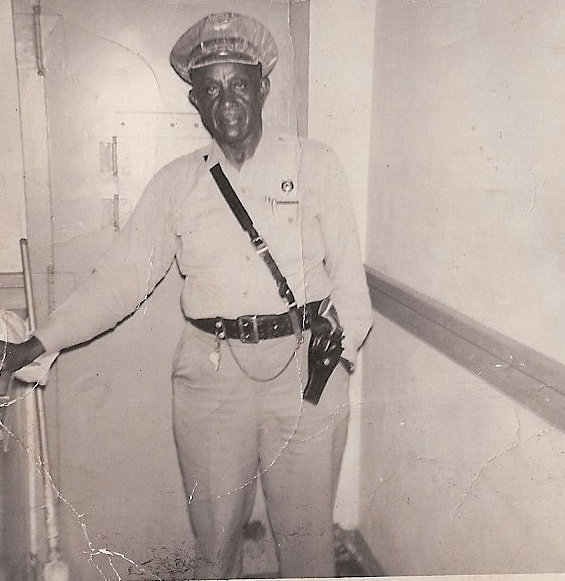
This time was different, though…I realized that my father-in-law is a griot! I witnessed my 15 year-old daughter sit, thoroughly engrossed as he shared stories from his youth and about his ups and downs in life. She listened attentively, probed, and opined just like I did when I was her age – this was a multigenerational storytelling event! I made a quick, on-the-spot decision to interview my father-in-law for fun and for this blog. Interviewing someone about your family history doesn’t have to be hard, even if it happens spontaneously. I want to help you take advantage of unique and unexpected opportunities like the one I had, so I’ve written up a few tips you can use on your research journey. My invitation to the interview went like this:
Tip 1
Stay ready! You can have a general list of questions as your home base to get you started when an opportunity presents itself, but feel free to walk or run down any path that will lead you to the information you want to know. What person, event, or topic do you want to explore? Quickly ask yourself “why” you want this information; hopefully, that will give you the motivation and confidence to initiate a conversation and to help you come up with the best follow-up questions.
Tip 2
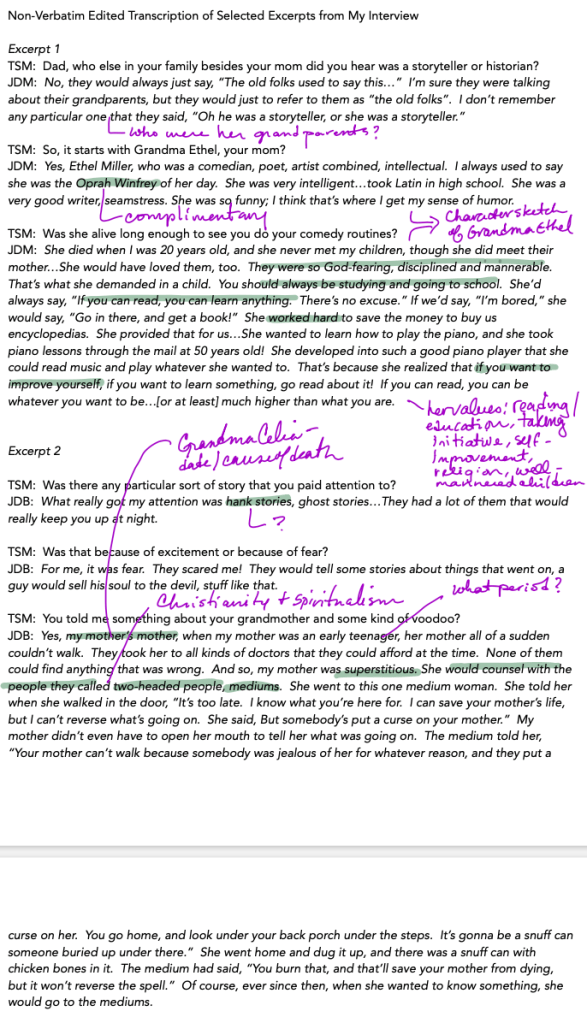
Be sure to pose mostly open-ended questions. Questions that encourage people to think deeply rather than just offer quick “yes, no, or maybe’s” will yield richer responses. For example, when I interviewed my father-in-law, I ended up learning about character traits of specific family members and about specific events in their lives even though I didn’t ask about that, in particular. Here are a few of the follow-up questions that led me to those treasures: Who in your family was a storyteller? What kinds of information were particularly important or impactful to you? How have you documented or safeguarded the stories you thought was important, and how did you decide what needed to be passed on?
Tip 3
Record your interview using written/typed notes, audio, and/or video methods. I like to supplement audio and video recordings with handwritten notes that include my observations of the environment, mood, dress, non-verbal communications, etc. You may want to scan or take pictures of documents your relative has, so be sure to keep a device with the appropriate apps/tools nearby.
Tip 4
Transcribe your interview. Write or type the information you hear and observe on your recordings. Later, you can analyze the transcript and your notes for important facts and interesting gems that you might want to research further.
Tip 5
Create something that represents your ideas and conclusions about what you found. It could be a digital data file, a photo book, or even a blog post (ahem) that you share with family.

My last question for Dad was, “What advice do you have for those who might listen to our discussion today, perhaps other family historians and griots?” I’ll leave you with his words of wisdom:
“Talk! Take notes, talk to the old folks, ask questions. Don’t wait until they die and end up wishing you had asked what you didn’t…people are getting old, and they’re dying off. Once they die, that information is gone!”
 The Genealogy Griot