For years, I have been preoccupied with my health and the food and exercise decisions I make to support the changes I’m trying to make (e.g., losing weight). When I think about the grandmother who raised me, I don’t remember her talking about any of that stuff. She was a stout woman with strong legs and a prominent belly. I never heard her make self-deprecating remarks about her apple shape or a lack of energy because of potential vitamin deficiencies. She took walks down the gravel road with her sisters, but she never lifted weights or counted calories or documented what she ate. Recently, I asked her why she never seemed to talk about health and well-being when I lived with her as a child. She told me matter-of-factly that she didn’t need to do all of that because she was active enough doing her daily work duties (e.g., cooking three main meals, washing, hanging, and folding clothes; feeding the pigs their slop; vacuuming; checking in on her elderly parents, and working part-time doing Mme. Elie’s housework [I thought her name was “Memilee”, but I recently learned that she was being referred to by her husband’s first name]. My grandmother did a lot of functional exercise, and she never had any apparent medical problems except indigestion. She pretty much ate what she wanted. What she had is what she cooked, and what she cooked is what she ate. And what she ate, her children ate. She’s 91 years old today and relatively healthy. And so, today, I’m reflecting on how my grandmother built our family’s food culture. What did we enjoy eating, and where did it come from? Here are some of the things I remember about food and eating.

Practices and Values
- You can’t go to somebody’s house and not eat something, and you will get hounded until you do or leave. You might get away with the host leaving you alone with her derisive smile, but it was considered rude to decline a drink, snack, or meal, and you’d probably get talked about as soon as you left. When we would visit Louisiana, we were required to go to my great-grandparents’ house first (my grandmother lived on a lot behind theirs). My great-grandmother, Momo Ida, always had some cold water or juice and a fruit waiting for us. She was satisfied witnessing our enjoyment of her love offering, but if I didn’t take something before we left, I could feel her old bluish eyes staring at my back and imagine her thin lips pursed in disappointment.
- You can totally eat dinner for breakfast. My husband doesn’t like leftovers, and he certainly does not eat dinner for breakfast, but my grandmother and all of her children would and do.
- It’s not right if it has no spice. I don’t know who didn’t cook with cayenne when I was growing up. Of course, you shouldn’t overdo it, but pepper food is good food. I had to tone it down when I was pregnant with my first child (and of course she doesn’t like spicy food!), but I still love a good, spicy dish.
- Eat rice. A lot. My family ate rice (and gravy) every day and for multiple meals. I try, but these people (i.e., my husband and children) have more of a penchant for pasta, potatoes, and bread than glorious rice.
Traditional Foods
- Coush-coush (rhymes with push-push) was one of my favorite meals. As an adult, I realize that cooked cornmeal and milk is a poor man’s meal, but it was sooooo good! Contrary to the idea that it came from Cajuns, it probably was passed along many generations of Louisiana Creoles, who, probably got it from their enslaved ancestors who figured out how to reconnect with the African staple grain, cous cous. Before I could cook it myself or when I was feeling lazy, I would simulate it using crumbled up Luby’s cornbread, but nothing brought back the comfort and nostalgia that real cush-cush did. Even these days, I cook it for my family (minus my Texas-native husband who says he ate it when he was younger but doesn’t really know what I’m talking about…he couldn’t!), and they love it, too!
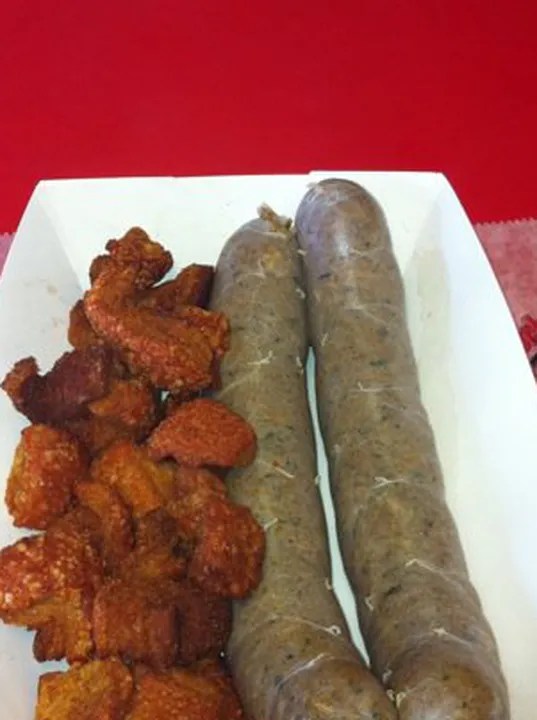
- Boudin and cracklins. I don’t eat pork now, but I did when I was younger. Traditionally, mixed rice, throw-away meat, vegetables (mire poix, the “holy trinity” of celery, bell pepper, and onions), and seasonings all were stuffed in a casing of pig intestines. Sometimes we would eat it wrapped in a slice of soft, white Evangeline Maid bread (my uncle brought extra loaves from work). My grandfather often would buy cracklins to accompany the boudin or maybe as a little snack. Cracklins are fried pieces of pork meat and skin; the skin usually is hard, but the meat is somewhat soft or chewy.
- Rice dressing. Rice dressing was a way to spruce up the norm. Other people call it “dirty rice”, but I never understood that growing up. It seems a lot like the filling in boudin, but I don’t know if it is. Usually, my grandmother cooked it with chicken gizzards and liver that she would blend first, along with her mire poix, raw in her food processor; she sometimes would put some pork breakfast sausage in it, too, before mixing it with white rice. I loved eating this on special occasions with potato salad and good (usually stuffed or barbecue chicken).
- Stuffed chicken. This was something that my relatives attribute to my grandmother as a unique creation. I haven’t seen anyone besides my relatives make this meal, but I doubt it would taste the same if they did. It seems like our family’s secret recipe, so you’ll just have to have one of us cook it to understand what I’m talking about. Trust me, it’s wonderful!
- Gumbo, another food with African origins, is something between a soup and stew. My grandmother typically cooked it with chicken parts and sausage, and sometimes shrimp. Shamefully, I did not eat gumbo the way it was meant to be eaten when I was younger – a quarter- or half-bowl of rice drowned by the brown, roux-based soup. I didn’t like the dish because, for some reason, I didn’t like all that liquid…oh, and also, the chicken seemed stringy and bland.So, what I would do is eat the rice and sausage with just a little bit of the soup (or, gravy). Remembering how my grandmother used to spoil me confirms that she was an angel in disguise. As my godmother would say, Bless her heart.
- Crawfish boils. Unlike most of my family, I never liked seafood as a child. I briefly went through a period of eating shrimp and crawfish, but I already had developed an appreciation for the family affairs that accompanied the Catholic practice of abstaining from eating meat on Fridays during Lent. The men in our family would boil vats of seasoned water and dunk small cobs of corn, whole russet potatoes, and crawfish in them. The result was extremely salty and spicy (we say “pepper”) food that caused tastebuds to swell with joy and pleasure.
- Pecan candy, popcorn balls, and sweet potato turnovers. Mmm, these divine creations were definitely seasonal treats. My Aunt Priscilla made pecan candy in the fall and popcorn balls in the summer when I asked her and if she had the time to do it. They are melt-in-your-mouth crumbly, nothing like the pralines they sell at Buckey’s and other stores. It took me a while, but I can finally make them close to the way she did. The sweet potato turnovers usually were sold at Christ the King Catholic Church in Bellevue’s annual September fair and fundraiser. I don’t know who made them, but they were over-the-roof-and-hilltops delectable, and I have never had any that good since the lady stopped making them.
- Foods that deserve honorable mentions include ones that I enjoyed but didn’t love (e.g., my Aunt Van’s crawfish etoufee) and those that I detested (e.g, putrid cow punch).
Today, food engineers have come up with ready-made roux and rice dressing mix, but the way I watched my grandmother cook is what I think of when I think of ancestral traditions. What she cooked and how she cooked it formed the culture of her family, even two and three generations on. Have you ever catalogued your family’s food history? Share this link with your friends, and post your favorite recipes and stories with me!


I find this very interesting. Thank you for posting.
LikeLike
You’re welcome…thanks for reading!
LikeLike